Best Running Shoes for Beginners: The Ultimate Guide to Selecting Your First Running Shoes
Published: July 10, 2026 | Last Reviewed: Aug 18, 2026 | Read time: 6 min read
Starting your running journey is exciting. Choosing your first pair of running shoes? Not always that simple.
With endless recommendations, technical terms, and conflicting advice online, it's easy to get lost in conversations around cushioning, stability, heel-to-toe drop, and pronation. It's not about knowing every detail of running shoes, it's about finding a pair that feels great, helps you reach your goals and helps you enjoy running from the get-go. The good news is that you don't have to understand everything in the runner dictionary to select the right running shoes. For most beginners, it will simply boil down to finding footwear that fits comfortably, feels good and is suited to how you 're going to run. The right pair won't magically make you faster overnight. What it will do is help your runs feel comfortable, more efficient and more consistent, so you can focus less on your shoes and more on pushing your limits and enjoying the journey. Whether you're going to run to shed some weight, improve your fitness, plan to run your very first 5K, or just feel like going out for a couple of morning runs every week, buying appropriate running footwear is one of the smartest investments you can make.
In this guide, you'll learn everything you need to know before buying your first running shoes. You'll discover what features to look for, how to choose a running shoe, the pitfalls to avoid, and which PUMA running shoes are ideal for various types of running and objectives.

Why Running Shoes Matter
When running, each step that your foot takes has a lot more impact on your body than when you are walking. That effect builds up in a short period, as you put thousands of feet to the ground in a short period. That's precisely why running shoes are constructed in another way compared to traditional sneakers(Opens in new window) or gym shoes(Opens in new window). They're built for repetitive impact, offer cushioning when it counts, and help to make every step a bit more controlled.
A great pair of running shoes(Opens in new window) does more than just feel comfortable. It’s balanced perfectly, with impact evenly distributed across your feet, giving you the right mix of cushioning, stability and traction for every stride. It may not be immediately apparent, but each time it is performed, it is done with greater control and smoothness. Comfort is more important than speed or performance, particularly for first-time runners. If your shoes feel supportive and comfortable to run in, you're far more likely to follow through with your routine and developing confidence in a gradual fashion. The right running shoes can help you:
- Reduce repetitive impact stress with every foot strike.
- Enjoy a more comfortable and smoother ride from beginning to end.
- Be confident with better grip on roads, pavements and running tracks.
- Move effortlessly through a smooth heel-to-toe transition.
- Maintain lasting comfort during longer training sessions and daily runs.
Remember, no running shoe is 100 percent injury proof. But getting the right well-fitting and running shoes can make running feel more comfortable and fun.
🏃 PUMA Running Coach's Tip: Forget the perfect running shoe, just focus on a great one. For almost all of the beginners, the best running shoe is the shoe that you want to put on and run around in from day one.
Running Shoes vs Regular Sneakers
Many new runners wonder if they should buy running shoes, or if it's OK to run in their regular sneakers.
The sneaker is a good option for walking around and wearing every day, but they are not meant for the constant forward motion and impact of running. Running shoes have elements designed to make the shoe comfortable and efficient for running and are designed to have an infinite number of foot strikes.
| Feature | Running Shoes | Regular Sneakers |
| Cushioning | Absorbs repeated impact | Made for casual comfort |
| Weight | Lightweight | Usually heavier |
| Breathability | Mesh for airflow | Varies on design |
| Grip | Built for running surfaces | General everyday traction |
| Flexibility | Supports forward movement | Multi-purpose use |
| Durability | Built for high-mileage training | Made for daily wear |
If you run twice or more times a week, then the cost of investing in proper running shoe is more than worthwhile. The fit, feel and performance will be superior and these shoes are built to accommodate more impact.
Common Running Terms Explained
When you are considering your first pair of shoes for running, you're likely to hear a few technical terms. They may appear to be baffling at first glance, but once you know a bit more about them, it'll be much easier to pick which pair is right for you. A quick explanation of some of the most popular running shoe terms, in simpler terms.
- Daily Trainer - Ideal for everyday training and easy to use for regular running. For beginners, this is typically the only type of shoe you require, it's dependable, comfortable, and simple to run in as you get utilized to the routine.
- Cushioning - Comfortable material that absorbs impact and adds levels of comfort in every step taken in the midsole. For new runners, a moderate level of cushioning often works best as it offers a good balance of comfort and support.
- Stability - This word will be used for shoes which provide additional support. It's that added structure that makes it more feel more controlled for some runners, particularly on longer or slower runs.
- Heel-to-Toe Drop - It's just a matter of the elevation of the heel relative to the front of the shoe. It might sound technical but early on, if you are not experienced, it's not something you need to think too much about.
- Energy Return - Certain midsoles provide a level of responsiveness, making every step lighter and more powerful. Comfort and fit are a necessity for any new player, and it's nice to have.
What Beginners Should Look for in Running Shoes
For the beginner, focus on comfort, stability and fit, not on advanced technologies or professional racing shoes.
- Comfortable Cushioning - If you're a new runner who's looking for cushioning, but not too much, then this is the type of shoe that will suit you best. Just the right amount of cushioning will lead to fewer cases of fatigue during prolonged running sessions and a smoother stride.
- Breathable Upper - Running will cause you to be hot. Breathable mesh uppers will allow more air flow and keep your feet cooler and more comfortable, particularly if you are running later in the day when it is hot.
- Lightweight Design - Running with heavy shoes can make it more difficult than it needs to be. A lightweight trainer delivers a more natural running feel without compromising on the support you need to keep moving with confidence.
- Reliable Grip - A strong and reliable rubber outsole with dependable traction helps to boost confidence on various surfaces, whether on the road, park or treadmill.
- Proper Fit - Even the most elaborate running shoe will be a bad fit if it doesn't fit correctly. The shoes need to feel comfortable the first time you wear them – no “break-in” period.
In what ways should running shoes fit?
A good running shoe should be neither too tight nor too loose. Your toes should be able to move around freely, and your heel will not be uncomfortable. Here are a few handy fitting tips for the first pair of shoes you buy:
- There should be about 1 thumb between the longest toe and front of the shoe.
- Make sure your heel stays securely locked in place to help prevent slipping while walking
- The midfoot should be snug, but not tight.
- Run in test shoes wearing the type of socks you will wear during your run.
- For the best fit, try on running shoes later in the day when your feet are at their largest. This helps ensure lasting comfort, support, and performance on every run.
🏃 PUMA Running Coach's Tip: If you are between two sizes, it's better to choose a shoe that is a little bit bigger than a shoe that is tight. Your feet will swell during longer runs, and additional toe space could make you more comfortable and can help to minimize pressure on your toes.
The Most Common Errors Made By New Runners
But like with shoes, it is equally crucial to have the right attitude. Many new runners suffer from unneeded pain because they make unnecessary mistakes in their initial weeks of running. By knowing about the usual mistakes, you can create a workout routine that you won't find too hard or too boring.
1. Choosing Shoes Based Only on Appearance
Shoes should be chosen solely based on comfort. Colours, limited editions or trendy designs are easy to fall in love with. While style is important, comfort should always come first. A well-fitting, comfortable shoe will be much more effective for training than one simply for looks.
2. Purchasing the Wrong Size
There are many people who purchase running shoes in the same size as their regular shoes. But there are natural reasons why feet will expand during longer runs. Shoes that are too small can cause pain, blisters or pressure on the toes.
Always verify prior to purchase that:
- There's about one thumb's width of space in front of your longest toe.
- Your heel remains from slipping.
- The shoe doesn't pinch across the widest part of your foot.
3. Running in Old Gym Shoes
Training shoes aren't meant for forward motion and are better suited for side-to-side movements and gym activity. For anyone who is a frequent runner, a running shoe is typically going to supply:
- Better cushioning
- Improved flexibility
- The rolling of the feet through the movement is more efficient
- Greater long-term comfort
4. Running Too Far Too Soon
Many of the mistakes that are made by beginner runners is that they try to go long distances in the first week. Rather, slowly build up distance and duration. A walk/run strategy helps muscles, joints and cardiovascular system adjust in a safe manner.
5. Ignoring Discomfort
Running should be a challenge, but SHOES SHOULD NOT CAUSE PAIN! If there is some rubbing or pressure, or discomfort that does not go away after a while, don't think your shoes need to "break in". A properly fitting running shoe should feel good when you first run in it.
With all the information about what to avoid and what to look for, it's now time to choose the right beginner running shoes for your needs. From comfort, value and added support, the comparison below will help you find the right PUMA running shoe for you!
Top PUMA Running Shoes for First-Time Runners
Every runner has his/her own goals. Some would like to find a shoe to wear for the first 5K, others just want a comfortable shoe to walk and run in from time to time. The table below may help you decide which one you need depending on your needs.
| Your Goal | Recommended PUMA Shoe | Best For |
| Everyday training | Velocity NITRO™ | Ideal for running all day, 5K training and general use |
| Great value | Electrify NITRO™ | Beginner-friendly tools with strong performance at affordable prices |
| Walking and light running | Softride Enzo Evo | Changing from walking to running |
| Extra support | ForeverRun NITRO™ | Runners who prefer a more supportive ride |
Regardless of which shoe you select, the most significant is how the shoe feels on your feet. The ideal running shoe is not necessarily the most expensive, the most sophisticated, or the coolest-designed shoe, it's the shoe that gets you to run more.
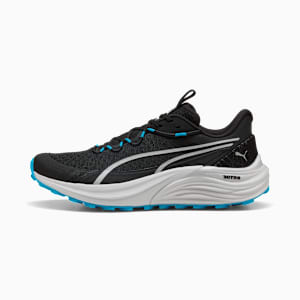
1. PUMA Velocity NITRO™
The Velocity NITRO™ is one of the better cushioned running shoes if you're purchasing only a single pair that will cover nearly any type of beginner training. Its balanced ride makes it equally at home on shorter runs during the day, longer runs on the weekend, or while preparing for your first organized race.
Why is it a good choice?
- Responsive and soft NITRO™ foam cushioning
- Easy-to-wear for every workout
- Smooth, no heel to toe movement
- A durable outsole with a good grip
- Good for both, 5K as well as 10K training
Best for
- New runners
- Daily training
- Building weekly mileage
- First-time race preparation


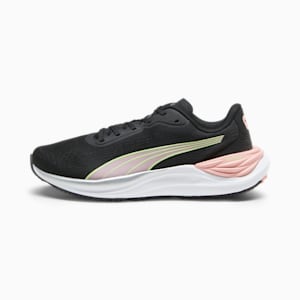
2. PUMA Electrify NITRO™
The Electrify NITRO™ is a fantastic running shoe for the beginning runner who does not wish to purchase an expensive shoe at first. Effective for regular trainers, yet lightweight for the new runners.
Why is it a good choice?
- Lightweight construction
- Everyday comfort cushioning
- Durable construction
- For day-to-day training quality at an affordable cost.
Best for
- New runners on a budget
- Fitness running
- Practicing short to medium-distance training


3. PUMA ForeverRun NITRO™
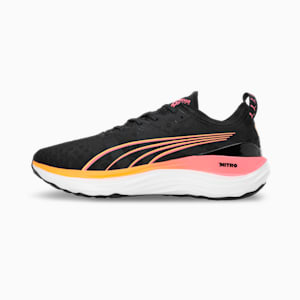
People prefer a more supportive experience, so they naturally gravitate toward running options that provide greater support. The ForeverRun NITRO™ is a stability running shoe that provides the softness and stability ideal for runners looking for a more controlled running feel and is best suited for longer distances. It’s not too hard, but it’s supportive and comfortable in the moment.
Why is it a good choice?
- Supportive platform
- Responsive NITRO™ cushioning
- Less likely to get cramped after longer training sessions
- Smooth, stable ride
Best for
- Runners in need of additional support
- Longer beginner runs
- Building confidence over distance


Cushioning vs Stability: What Do New Runners Actually Need?
One of the first choices a new runner has to make when they buy a pair of running shoes is whether to buy a cushioned running shoe or a stability running shoe. The words may seem like jargons, but it's often a simpler choice than it sounds. Comfort is the most important factor for most beginners. If it's comfortable the first time around, it's likely to be comfortable as you get your routine going.
Cushioned Running Shoes
A "cushioned running shoe" is designed to reduce impact and help the runner or jumper "feel less" while running or jumping. They are worn by many runners with a neutral gait to create a smoother, more comfortable run.
- Smoother landings at each step
- Comfy to wear and use for everyday training.
- Great for road running and treadmills
- Decreases fatigue with longer runs
This makes a cushioned morning trainer a great starting point if you want to get fit, run a first 5K or have a morning run every day.
Stability Running Shoes
These shoes are constructed with enhanced stability measures, such as additional footbed support where necessary to provide a more stable running experience.
Others simply like it since it's more well balanced and therefore straightforward, particularly during long runs.
- Additional support to each step
- Stable platform for consistent running
- Great for runners who need a more supportive shoe
- Ideal for use in everyday training or longer runs
Choose between cushioning and stability; it's the shoe you feel best in when you try it on. For most new runners, comfort is the more important factor than technical specifications.
Road Running vs Treadmill Running: Do You Need Different Shoes?
One more frequently asked question is that do you need different shoes for running outdoors and on a treadmill? For first-time runners: The answer is NO. A great running shoe performs well on both hard and soft surfaces.
Road Running
Roads and pavements are hard or rigid surfaces and require materials that have good shock absorption qualities. If you are going to run outside, wear shoes that provide the following:
- Durable rubber grip
- Comfortable cushioning
- Breathable upper materials
- Smooth heel-to-toe transitions
Treadmill Running
A treadmill offers a slightly softer, more consistent surface to run on. Typically, the same pair of running shoes that you wear for running outdoors will work great on a treadmill. If you're running indoors, then outdoors, you can use the same shoe, a good runner that is comfortable.
Park Paths and Light Trails
Many beginners also prefer to run in parks or on small gravel roads. In general, a regular road running shoe will do for these surfaces if they are relatively flat and dry. If you do not run regularly on rough, muddy or uneven surfaces then do not consider using trail running shoes.

Designed for Indian Roads & Running Conditions
In India, you don't know what's under your feet on the ground, slick city pavements, concrete roads, footpaths, dusty highways or treacherous monsoon roads. If you have a shoe that satisfies these characteristics you will feel consistent and confident all year long.
PUMA NITRO™ running shoes(Opens in new window) are made to handle the ups and downs of running day to day. They include lightweight NITRO™ foam cushioning and PUMAGRIP technology that helps you stay stable on wet conditions. These shoes are comfortable and responsive and offer grip on a variety of surfaces. PUMAGRIP is excellent on wet roads, which is a blessing during monsoon when roads can be unpredictable and slippery.
Why it matters for Indian runners:
- Stable PUMAGRIP traction: PUMAGRIP is designed to provide stable traction on dry and wet surfaces ensuring that runners feel comfortable while running throughout the monsoons and unpredictable weather.
- Responsive NITRO™ cushioning: Light cushioning that supports everyday training and longer runs.
- Breathable upper: Keeps your feet cooler and more comfortable in hot and humid environments.
- For daily runs: Great for city roads, parks and treadmills, best suited for Indian running conditions.
If there’s one thing many runners love during the wet season, it is a good grip. PUMAGRIP has become a favourite among many runners for its wet weather traction, making rainy runs feel a little less unpredictable.
Before Your First Run: A Beginner's Checklist
Having the right pair of running shoes is just one aspect of a great running experience. With a little preparation before the first run, you will feel more comfortable and confident.
Before You Leave Home
✔ Wear light, moisture-wicking socks.
✔ Wear loose, comfortable and breathable clothing.
✔ Tie your shoelaces as per your fit, but not too tight.
✔ Always carry water when running long distances or in hot weather.
✔ Dress for the weather.
Warm Up Before Running
Warm up for 5 to 10 minutes to prepare your muscles and joints for exercise.
Some simple warm-up exercises could be:
- Brisk walking
- Leg swings
- Hip circles
- High knees
- Some gentle exercises for the ankles.
Be sure to slowly increase the activity, allowing your body to adjust to it before you become too fast.
During Your Run
One of the biggest mistakes beginners make is running too fast.
Instead:
- Begin at a leisurely rate.
- Breathe slowly and deeply.
- Relax your shoulders.
- Run with shorter steps that are comfortable.
- Walk whenever necessary.
Keep in mind that all great runners began just where you are now.
After Your Run
Recovery is a key component to becoming a better runner.
Once you have completed your run:
- Take a 5-minute walk to cool off.
- Stretch the front and back of the thighs, lower back, and legs.
- Drink water.
- After a longer session, eat a well-balanced snack.
Little recovery practices lead to a fresher you for your next run.
A Simple 30-Day Running Plan for Beginners
One of the best ways to build up confidence is to slowly build up your running time. The four-week program is designed to build up your running time while giving your body time to adapt.
| Week | Training Plan |
| Week 1 | Walk 5 min + Run 1 min (Repeat 5 times) |
| Week 2 | Walk 3 min + Run 2 min (Repeat 5 times) |
| Week 3 | Walk 2 min + Run 3 min (Repeat 5 times) |
| Week 4 | Run at a comfortable pace for about 20-30 minutes |
Tips for Success
- Run 2-4 times per week.
- Rest at least 1 day between runs.
- No need to rush.
- Focus on consistency.
- Celebrate all your little achievements, be it running an extra 5 minutes or your first continuous kilometre.
When you're new to the sport, it's more crucial to be consistent than intense.
If you're ready to take your first steps, read our guide on [How to Start Running(Opens in new window)] for practical tips on getting started, building a running routine, warming up and staying consistent.
🏃 PUMA Running Coach's Tip: Don't be discouraged if you need to repeat a week before moving to the next one. All runners are different and the most important thing is to get into the habit rather than adhering to a timeline.
Expert Tips for First-Time Runners
Improving as a runner doesn't happen overnight. The most successful new runners are interested in developing habits and not getting the fastest time. These are some helpful tips to add to your running routine that will make it more enjoyable.
1. Listen to Your Body - When you start a running program it is normal to have some muscle soreness, but it is not normal to have continuing pain. If it doesn't feel right, take a break and let your body recover.
2. Increase Mileage Gradually - Don't run in too many miles each week. A slow ramp-up period gives muscles, joints and cardiovascular system time to get used to the activity.
3. Avoid Comparing Yourself to Other Runners - Everyone starts at a different fitness level. Don't compare yourself with other people but concentrate on how far you've come or how fast you've gone. Running a little extra distance or for a few more minutes than last week is a worthwhile achievement.
4. Prioritise Recovery - Running improvements happen during recovery as much as during training. Get plenty of rest, drink plenty of fluids, and have easy days in between more difficult ones.
5. Replace Your Running Shoes When Needed - The typical shoe will last anywhere from 500 km to 800 km, depending on your running habits, your body mass and the types of terrain you're running on. It's time to replace a pair when:
- Worn-out tread
- Flattened cushioning
- Uneven sole wear
- New pains or new discomfort when running
If you change your shoes at the proper time, comfort and performance will be maintained.
🏃 PUMA Running Coach's Tip: Don't save your running shoes only for race day. If you wear them during training, your feet can get used to the fit and feel of the shoes, causing each run to be more comfortable.
Frequently Asked Questions
Most first-time runners find it better to use a soft daily trainer that is comfortable, supportive and strong enough for daily use. Instead of focusing on advanced racing technology, prioritise a shoe that feels comfortable from the moment you put it on.
Yes. There are lots of running shoes that can be used for walking as well as running. If you are transitioning from walking shoes to running shoes it is important to make sure that you are comfortable in both.
Start 2-4 times per week. Take one or more recovery days between runs to give the muscles and joints time to adapt.
The average running shoe will last 500 to 800 kilometers, depending on your body weight, running style, type of terrain you run on and how often you run. If you find any of the following, change your shoes:
- Flattened cushioning
- Worn tread
- Uneven sole wear
- New aches or pains during running
If you are new to running, a cushioned daily trainer is your best bet because it is comfortable for a variety of running styles. If you want more stability, a stability shoe may be a better fit for you. Above all, when you try shoes on, pick the pair that fits you best.
Yes. A road running shoe is good for both, outdoor roads and indoor treadmills. You'll probably need just one versatile running shoe if you train mostly on roads, pavements, parks, and treadmills.
Not necessarily. Do not automatically select a larger size; rather, there should be about a thumb's width of room between the front of the shoe and the longest toe. This means that one can get a natural running expansion of the feet when running longer distances.
The price doesn't make a shoe a good fit. The shoe that fits well, matches your running objective and gets you running regularly is the best shoe!
Yes. A great all-day trainer can handle short distances as well as longer training runs and help you prepare for your first 5K. There is no need to have multiple pairs of running shoes while you're just beginning.
Take your time, but be consistent. If you run a proper run/walk schedule, wear shoes that you find comfortable to run in, and have a good recovery period between your runs, and focus on your time spent running instead of the time spent running, in time running can feel more enjoyable.
If a running shoe feels uncomfortable from the outset, you will not have a good shoe. Your heel should not slip, the toes should be able to move naturally, and you should not feel rubbing or pressure along the sides of your feet.
For most beginners, the PUMA Velocity NITRO™ is a great place to start because it offers a comfortable, balanced ride for everyday runs. If you're looking for a more affordable option, the PUMA Electrify NITRO™ is a solid choice. Need a little more support? The PUMA ForeverRun NITRO™ provides extra stability while still feeling comfortable. Whichever you choose, make sure the shoe fits well and feels right on your feet.
🏃 PUMA Running Coach's Tip: All successful runners were once a beginner. Instead of trying to run fast or go far, concentrate on having fun running. Make small improvements bit by bit, regularly. This will help running become a habit and give you confidence with each step.
Conclusion
Choosing your first pair of running shoes doesn't have to be complicated. Don’t get taken in by the most expensive model or the latest high-tech innovation. Instead, choose a shoe that fits well, feels comfortable, and is appropriate for the type of running you’re about to do. Comfort leads to consistency, and confidence grows with consistency over time. Whether you want to get in shape, train for your first 5K, or simply enjoy a few runs each week, having the right shoes can make every run more enjoyable.
PUMA offers running shoes for beginners with a range of features, including all-rounder shoes for daily use, budget-friendly models, soft cushioned shoes, and extra stability shoes. With a little knowledge about what to expect and which shoe to choose, you'll be ready to start your running journey on the right foot. Your first run might be tough, but with every run, you'll build confidence, consistency, and endurance.
Keep in mind that the most technologically advanced shoe isn't always the best running shoe. The best shoe is the one that helps you enjoy running and keeps you coming back for your next run.
Ready for Your Next Running Shoe?
No matter where you are on your running journey, there's a PUMA running shoe designed to help you move with confidence. Explore the PUMA Running Shoes collection(Opens in new window) to discover styles tailored to different running needs and find the perfect match for your comfort, stride, and goals.